
A Coversation with Pasi Sahlberg
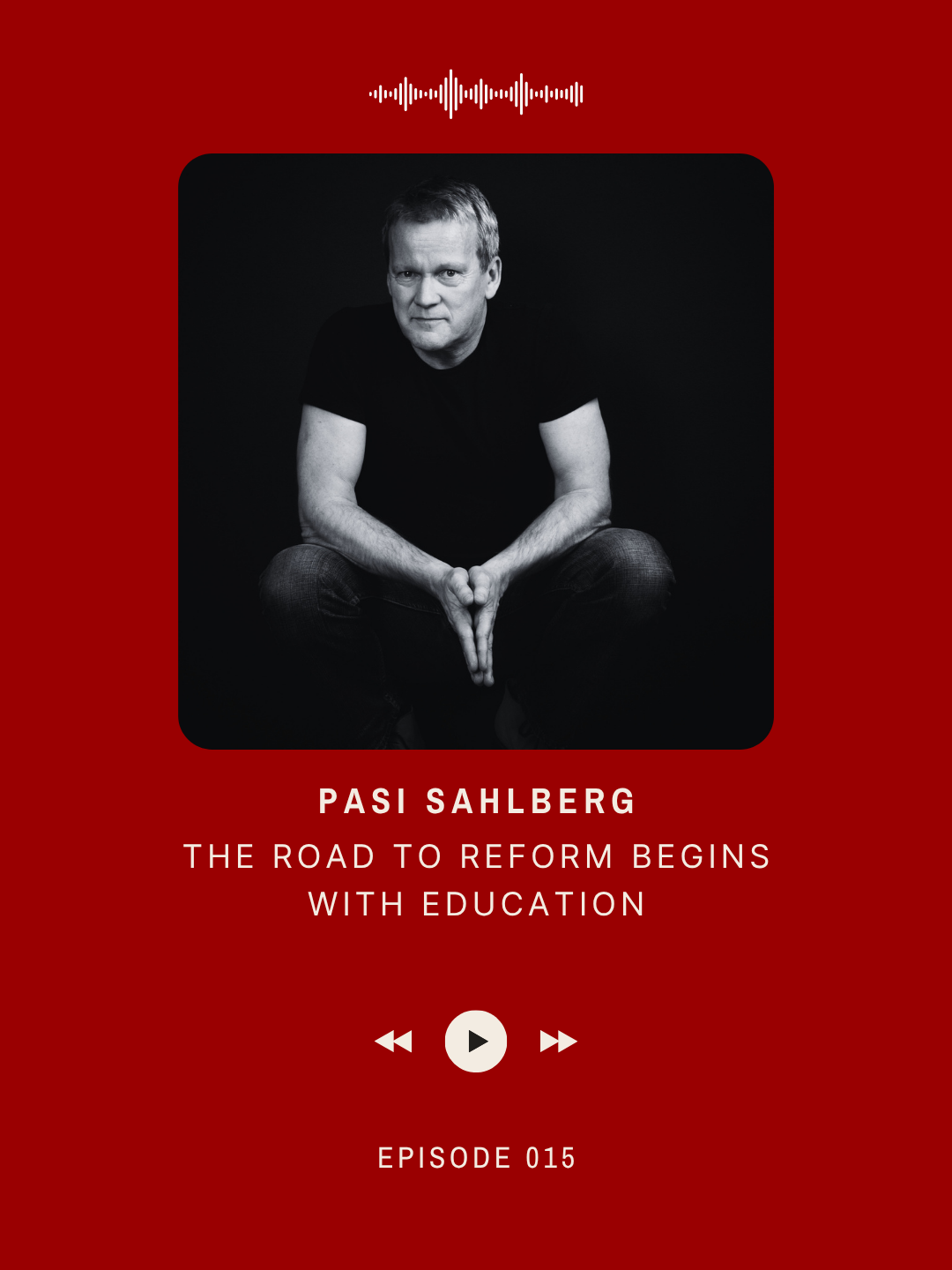
Listen to the full episode:
Time Codes:
00:30 Growing up in a rural Finnish schoohouse
03:06 Core values of Finnish education system
05:47 How to address diverse needs
09:09 Nutrition and learning: free meals matter
11:59 Early education leads to civic engagement
18:09 Screens, screens everywhere
20:57 The perils of social media
27:02 Threats to equity and access
29:48 Safety in schools: the impact of violence
33:00 Advice: How education can aid democracy
#listen #newpodcast
The Road to Reform Begins With Education
Time and again, debate about how 20th-century democratic norms came to prove so fragile, and how to avoid that fragility going forward, comes down to a single issue: education. How best to ensure fair access and sufficient funding. And what it takes to keep it safe, objective, and grounded in empirical fact – a shield against disinformation and an investment in the ability of future generations to act thoughtfully on their own behalf and on behalf of their societies.
Dr. Pasi Sahlberg, a Finnish educator and former classroom teacher, has devoted his entire professional life to studying what a good education means: for children, for instructors, and for the communities around them. In a global system dominated by standardized testing and diminishing resources, Sahlberg has become one of the world’s most respected advocates for schooling that prioritizes the experience of students. It’s an outlook that prioritizes play, curiosity, and socialization over screens, testing, and exclusivity. Through his writing and work at institutions including the World Bank and Harvard Graduate School of Education, he’s offered critical insight into how children learn best, and what it takes for teachers to thrive in jobs that are increasingly overscrutinized and underpaid. (In one recent lecture, Sahlberg emphasized the value of “teacher looping,” or keeping primary-school students tied to a single teacher over the course of several years, in providing both student and teacher satisfaction.)
Sahlberg’s home country of Finland is consistently ranked as having one of the best education systems in the world, with high levels of literacy, critical thinking, and adaptive problem-solving. Its rise to the top of global rankings like PISA – the worldwide student assessment organized by the Organisation for Economic Cooperation and Development, or OECD – is often referred to as the “Finnish education miracle.” But Sahlberg says that in fact, no miracles are necessary to provide children with a quality education. What’s needed instead is the recognition that all children have the right to an education that nurtures their sense of curiosity, reduces time spent at their desks, and fully prepares them for life as active members of their countries and communities.
Sahlberg is currently serving as professor in educational leadership at the University of Melbourne. He speaks about his earliest days as first a student, and then a teacher, in Finland. He also talks about the importance of free-lunch programs, and whether Australia’s groundbreaking social media ban for children under 16 can be considered a success. Sahlberg, who followed in his grandfather’s footsteps by working for many years in the United States, also talks about how some of the most progressive theories in childhood education got their start in the U.S., and what that country now stands to lose as education is underfunded, fractured, and politicized under Donald Trump.
Comments, questions, suggestions? Get in touch, we’d love to hear from you: hello@thewow.world