
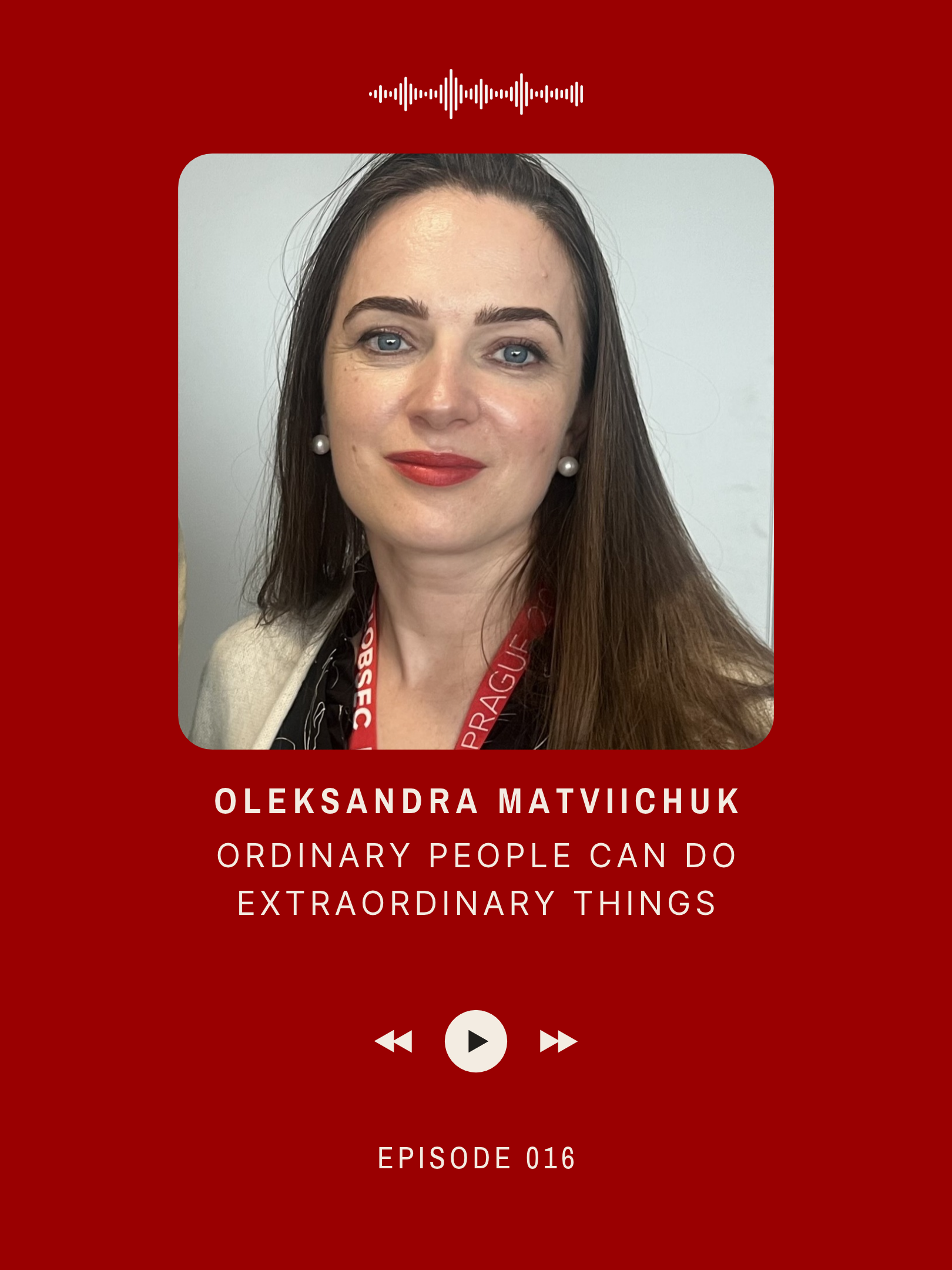
Listen to the full episode:
Time Codes:
3:00 The call of human rights law
5:32 Organizing a grassroots movement
7:45 Don’t rely on politicians to save you
8:45 The authoritarian playbook
10:50 Danger of a crumbling world order
11:55 Don’t take freedom for granted
13:50 Shock as the U.S. votes with dictators
16:30 The language of values keeps us safe
17:50 Breaking the cycle of impunity
20:10 Faith in U.S. civil society
#listen #newpodcast
Ordinary People can do Extraodrinary Things
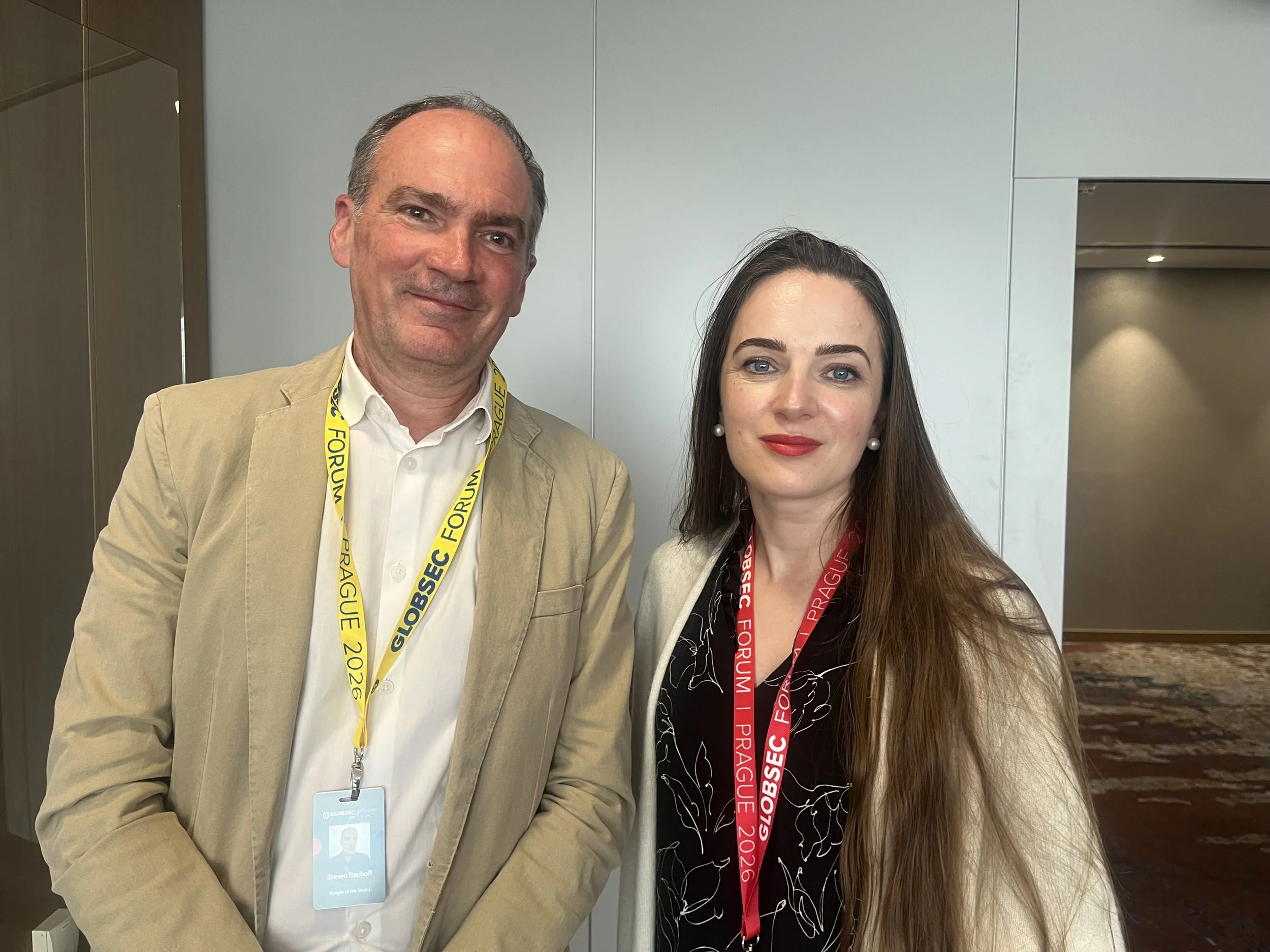
“The global storm is approaching,” warns Nobel Laureate Oleksandra Matviichuk. It’s a dire, if accurate, assessment, but not devoid of hope. Because, as she also says, the choices we make are what will define our future, and it’s ordinary people, through their own agency, who can make all the difference.
Oleksandra knows, because her own has borne this out. She joined Ukraine’s Center for Civil Liberties (CCL) fresh out of law school with a degree in human rights law, in 2007, and quickly rose through the ranks to become its chairwoman. She has overseen many of its key initiatives, including the Euromaidan SOS, which she established in response to the violent crackdown on student demonstrators in Kyiv in November 2013 to provide legal, medical, and other assistance to the protestors during the Revolution of Dignity. It later shifted to tracking forced disappearances and human rights monitoring in occupied Crimea and the Donbas region. She and the CCL were awarded the Nobel Peace Prize in 2022.
Today, as her home country remains under brutal attack by Russia, Oleksandra crisscrosses the globe, advocating for a free and independent Ukraine, the rule of law, democracy, and holding those in power to account. It’s relentless work, but she gains strength from her conviction that people are not indifferent – to the fate of Ukraine, or to each other. As she puts it, “solidarity is infrastructure” that is absolutely necessary in defending freedom everywhere.
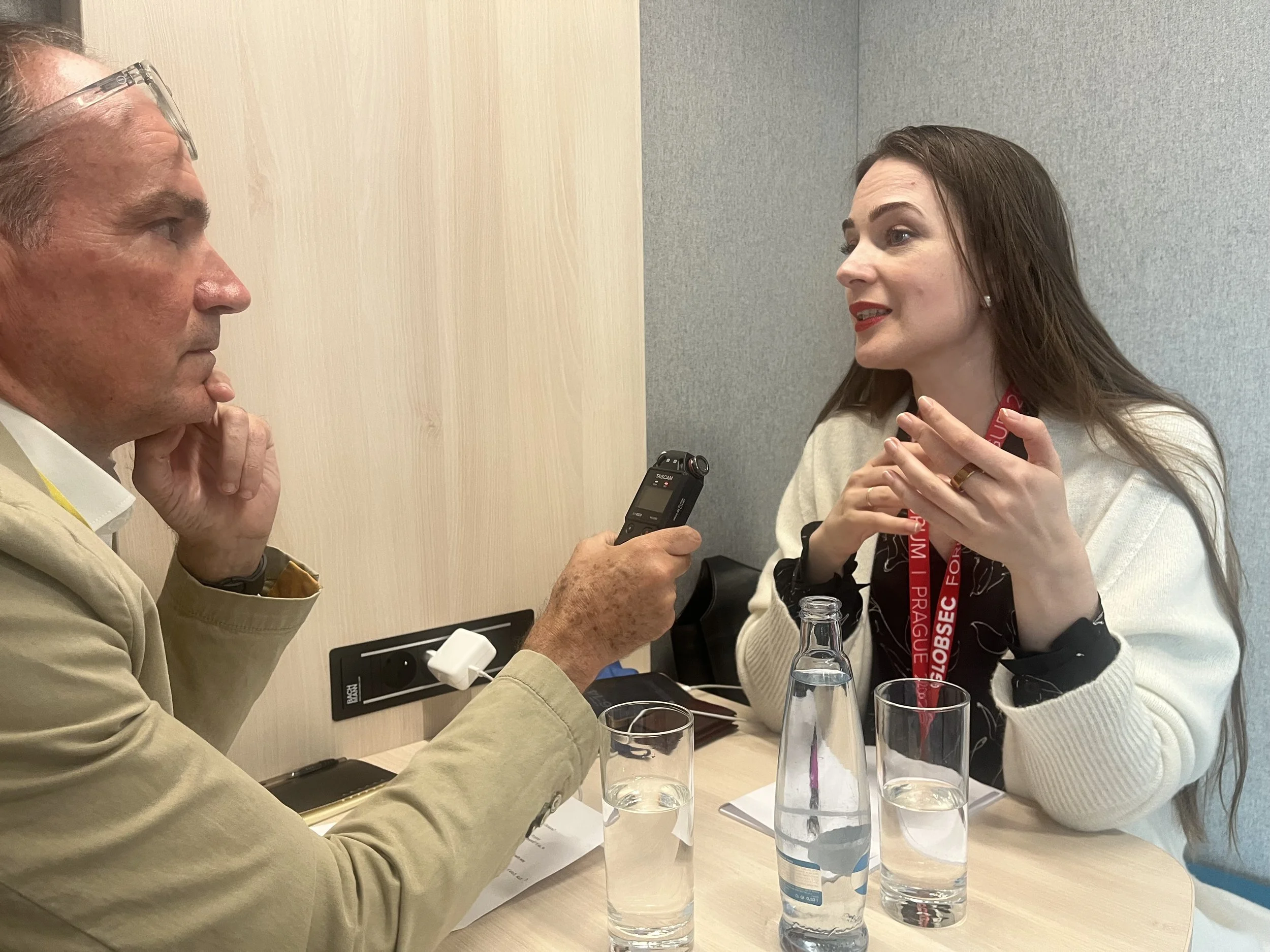
In our conversation, we talk about the shared playbook of modern authoritarians. She explains the importance of horizontal mobilization, local democracy, and the power of citizen-led networks that harness the strength of regular individuals. She shares her views on the dangers of becoming simply passive “consumers of democracy,” and the importance of documenting the crimes of authoritarians, in order to make sure that the cycle of impunity is eventually broken and accountability is served.
In discussing all of this, Oleksandra says she speaks in the “ancient language of values.” This may seem quaint or even naïve in the Trumpian era of might makes right. But as she reminds us, history shows that a world not based on the rule of law, but rather on the will of the strongest, is a world of “wars and mass violence.” There’s still time to correct course, but we all must exercise our own agency to make sure that happens.
Comments, questions, suggestions? Get in touch, we’d love to hear from you: hello@thewow.world